Quelle: UEX
Unabhängiger Blog über interessante Rohstoff-Stories, spannende Wirtschafts-, Politik- und Finanzthemen, das BIG PICTURE, den Kapitalmarkt, aussichtsreiche Investments, aktuelle und brisante Themen + Trends aus der Rohstoff-, Minen- und Energiebranche, sowie über sämtliche Faktoren, die auf den spannenden Rohstoff-Markt Einfluss nehmen. "The more I learn, the more I realize how much I don‘t know." (A.E.) | Always Do Your Own Due Diligence.
Posts mit dem Label Energieträger werden angezeigt. Alle Posts anzeigen
Dienstag, 31. Mai 2016
Uran: Effizientester Energie-Träger
Labels:
Analyse,
Big Picture,
Effizienz,
Elektrizität,
Energie,
Energiebranche,
Energiemarkt,
Energiemix,
Energieproduktion,
Energieträger,
Fossilbrennstoff,
Gas,
Grafik,
Kohle,
Öl,
Strom,
Uran,
Vergleich,
WTI
Donnerstag, 5. Mai 2016
Kohle: Visualisierung der globalen Handelsströme
Beeindruckender Chart, der die gewaltigen Handelsströme für den wichtigen Energieträger widerspiegelt:
Quelle: mining.com
Labels:
Australien,
Big Picture,
China,
Elektrizität,
Energie,
Energierohstoffe,
Energieträger,
Handel,
Handelsbilanz,
Handelspartner,
Handelsströme,
Indien,
Indonesien,
Kohle,
Kohleindustrie,
Nachfrage,
Rohstoffe
Freitag, 14. November 2014
Kohlebranche: Überangebot erhöht Druck auf Produzenten - Glencore schließt temporär Minen in Australien
Die belastende Angebotssituation in der Kohlebranche hat sich in den letzten Monaten nicht verbessert. Glencore (LSE:GLEN) kündigt als einer der größten Kohleproduzenten daher weitere, temporäre Minenschließungen in Australien an, die in diesem geringen Umfang aber keinen signifikanten Einfluss auf die Angebotslage haben werden..
Glencore shutting Australian coal mines over Christmas
Cecilia Jamasmie | November 14, 2014
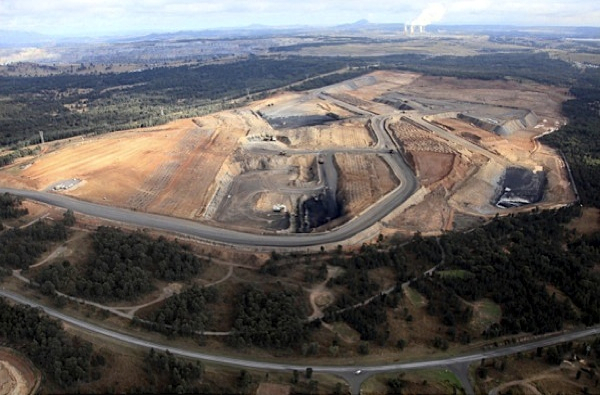
In March Glencore announced it would close its Ravensworth underground coal mine in the Hunter Valley (Image courtesy of Glencore)
In an effort to counter weakness in global fuel markets, mining and commodities trading giant Glencore (LON:GLEN) has decided to shut down all of its Australian coal mines for three weeks over the Christmas holiday season.
The decision would allow it to avoid taking more drastic measures, including closing those or other mines for much longer.
The Swiss-based company — Australia's largest coal producer — said the decision would allow it to avoid taking more drastic measures, including closing those or other mines for much longer.
According to The Australian, the firm had looked at a variety of options to curb Glencore’s output into a seaborne market already overstocked with coal. The options pondered were halting production at one of its least profitable mines for a year, the paper reports.
“This is a considered management decision given the current oversupply situation and reduces the need to push incremental sales into an already weak pricing environment,” Glencore said in a statement Friday.
It added the shutdown would cut output from its Australian operations by around 5 million tonnes. But the miner said it remains confident that demand growth for its coal will restore the supply and demand balance over the medium term.
Forced leave
Roughly 8,000 of the company’s employees will be forced to take annual leave over the period, and any staff who do not have enough leave will be required to bring forward some of next year's holidays.
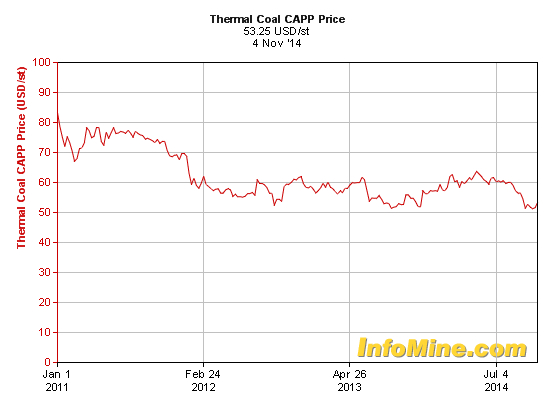
Prices for Glencore’s core Aussie production, thermal coal, have roughly halved over the past three years from about $110-130 a tonne to just over $60 a tonne.
The company owns 20 coal mines at 13 mine complexes across NSW and Queensland, which produced more than 80 million tonnes of thermal and coking coal in 2013 and employed around 8,600 people.
In March the company announced it was closing its Ravensworth underground coal mine (pictured) in the Hunter Valley, due to falling prices and stock surplus in the market..
Labels:
Australien,
Belastungsfaktoren,
Energie,
Energieaktien,
Energiebranche,
Energieträger,
Fundamentals,
GlencoreXstrata,
Kohle,
Kohleaktien,
Kohlebranche,
Minen,
Minenaktien,
Produzenten,
Rohstoffe,
Überangebot
Mittwoch, 22. Januar 2014
Thirsty energy: An infographic by the World Bank Group
Informative Visualisierung:
Quelle: worldbank.org
Quote:
Thirsty Energy: Securing Energy in a Water-Constrained World
Significant amounts of water are needed in almost all energy generation processes, from generating hydropower, to cooling and other purposes in thermal power plants, to extracting and processing fuels. Conversely, the water sector needs energy to extract, treat and transport water. Both energy and water are used in the production of crops, including those used to generate energy through biofuels. Population growth and rapidly-expanding economies place additional demands on water and energy, while several regions around the world are already experiencing significant water and energy shortages..
Link: http://www.worldbank.org/en/topic/sustainabledevelopment/brief/water-energy-nexus
Labels:
Angebot,
Bevölkerung,
Energie,
Energiebranche,
Energiesektor,
Energieträger,
Entwicklung,
Erdöl,
Fuels,
Gas,
Herausforderungen,
IWF,
Kohle,
Rohstoffe,
Verknappung,
Visualisierung,
Wasser,
Weltbank,
World Bank Group
Abonnieren
Posts (Atom)