Sonntag, 16. November 2014

Wochenrückblick und Performance-Vergleich: Rohstoff-, Minen- und Junior-Sektor

Ein Kursfeuerwerk am Ende einer hochvolatilen Handelswoche sorgt für einen krassen Turnaround bei den Gold- und Silberminen-Aktien.

Und erneut wischt ein bärenstarker Freitag die vorherigen Verluste komplett weg und wandelt sie in massive Gewinne um. Querbeet durch die Rohstoffbranche kommt es am Freitag zu einem wahren Kaufrausch, der von einem starken Anstieg der Ölpreise ausgelöst wurde. Verblüffende Ähnlichkeiten zur vorletzten Handelswoche stehen zu Buche.

Nachdem Gold- und Silberminen (HUI, XAU, GDX, GDXJ, SIL) in einer extrem volatilen Handelswoche zwei Mal scharf auch Talfahrt gingen (Montag und Freitagmorgen US-Zeit), setzte ein gewaltiger Turnaround ein, der zur größten Intraday-Wende in 2014 führte.

Notierten sämtliche Gold- und Silberminen-Indizes zum Handelsstart am Freitag noch 2-3% im Minus, schlossen sie nach einer beeindruckenden Aufholjagd den Handelstag mit Gewinnen von mehr als 5% ab. Solche wahnsinnigen Kursausschläge sind in den letzten Wochen im Edelmetallminen-Sektor nicht selten vorgekommen. Doch der letzte Freitag war von besonders krasser Volatilität geprägt.

Ein ähnliches Bild bei den Edelmetallpreisen, welche den Weg für die Rally ebneten. Silber (SLV) verzeichnete vom Tagestief bis zum Tageshoch am Freitag einen Anstieg von satten 7%. Und auch Gold (GLD) legte im Tagesverlauf mehr als 3,5% an Wert zu. Die gewaltige Volatilität und die scharfen Bewegungen sorgen für einen krassen Chart-Verlauf auf Wochensicht.

Volatil war es letzte Woche ebenso in anderen Rohstoff-Sektoren, auch wenn die Schwankungsbreite von den extrem spekulativen Gold- und Silberminen natürlich nicht annähernd erreicht werden konnte. So drehten Standard-Minenaktien (TXGM) und Anteilscheine von Kupferförderern (COPX) nach temporären Verlusten aber auch ordentlich nach oben. Steigende Kupfer- und Metallpreise sorgten im späteren Wochenverlauf für ein freundlicheres Umfeld.

Neue Rekordhochstände an der Wall Street (DJI, SPX) und eine kräftige Erholung bei den Ölpreisen (WTI, Brent), beflügelten am Freitag auch die Aktien der Öl- und Gas-Majors (DJUSEN), die schon die gesamte Handelswoche relative Stärke zu den Energiepreisen entfalten konnten.


Quelle: bigcharts.com


Legende:

·         GLD: SPDR Gold Trust ETF
·         SLV: iShares Silver Trust
·         COPX: Global X Copper Miners ETF
·         GDX: Market Vectors Gold Miners ETF (HUI Comp. ETF)
·         GDXJ: Market Vectors Junior Gold Miners ETF
·         SIL: Global X Silver Miners ETF
·         TXGM: S&P/TSX Global Mining Index
·         DJUSEN: Dow Jones U.S. Oil & Gas Index

Minenbranche, Länder- und Investment-Risiken: Rio Tinto appelliert an die G20-Staaten

Sam Walsh, CEO von Rohstoff-Gigant Rio Tinto (NYE:RIO), sieht in der aktuellen Krisenphase für die Minenbranche nicht nur enorme Herausforderungen, sondern auch große Zukunftschancen:


Rio Tinto’s Walsh urges G20 leaders to reduce investment risk

14TH NOVEMBER 2014       BY: ESMARIE SWANEPOEL
Photo by Bloomberg
Rio Tinto CEO Sam Walsh
PERTH (miningweekly.com) – Mining giant Rio Tinto CEOSam Walsh has called on the delegates attending the G20 summit in Brisbane, Australia, to support investment in their various countries by supporting the vision of economic growth and reducing investment risk..

RottMeyer Blog-Beitrag: "Lukas Reimann: Bürger versus Elite – Die Schweizer Goldinitiative"

Hörenswertes Interview von Frank Meyer mit dem SVP-Parlamentarier Lukas Reimann:

Lukas Reimann: Bürger versus Elite – Die Schweizer Goldinitiative

Lukas-reimann-190x13015. November 2014 | Kategorie: RottMeyer
von Frank Meyer
Wird sich die Schweiz goldene Handschellen anlegen? fragt eine Zeitung bezüglich der Abstimmung der Bürger dort über Hinterlegung von Gold in der Bilanz der Schweizer Nationalbank. Das Thema schlägt weltweit hohe Wellen. Mitinitiator der Schweizer Goldinitiative, Lukas Reimann, berichtet, dass das Ausland über dieses Thema mehr berichtet als die heimische Presse. Verständlich…
Geht es doch um eine mögliche Veränderung im herrschenden Geldsystem in der Schweiz, sollten die Schweizer am 30. November per Abstimmung festlegen, dass Gold zurückkehrt in die Finanzen des Landes und dort eine gewichtigere Rolle spielt als heute. In Deutschland wäre so eine Abstimmung des Volkes undenkbar. Ich habe dazu den Parlamentarier der SVP, Lukas Reimann befragt. Viel Spaß bei dem folgenden Interview!

00:00
00:00

Quote:
Schweizer Referendum zum Staatsgold: Erste Umfragen liefern spannende Ergebnisse
Hierzu die jüngsten Kommentare von Peter Boehringer:

"Interessanter Artikelhinweis zur Schweizer Goldinitiative (Referendum am 30.11.2014): Der N8waechter http://n8waechter.info/2014/10/schweizer-goldinitiative-erste-umfrageergebnisse-schockieren-das-establishment/ hat ein KingWorld-News-Interview mit Egon von Greyerz http://kingworldnews.com/kingworldnews/KWN_DailyWeb/Entries/2014/10/21_Today_Something_Shocked_The_Establishment_%26_The_World.html  übersetzt, in dem doch beachtliche Umfrageergebnisse einer Schweizer Zeitung zitiert werden:
„… Nun ist die erste Meinungsumfrage herausgekommen. Eine schweizer Zeitung hat die Meinungsumfrage gerade veröffentlicht. Das JA-Lager [Befürworter der Goldheimholung und Gold-Aufstockung] liegt bei 45 Prozent und das NEIN-Lager bei 39 Prozent, wobei 16 Prozent sich noch nicht entschieden haben. Das ist eine schockierende Entwicklung, denn die JA-Kampagne hat noch nicht einmal angefangen.“

ð  „Noch nicht einmal angefangen“ ist natürlich nicht ganz korrekt. Die Schweizer Kollegen sind bereits durchaus rührig - und es wird in den kommenden Wochen eine Reihe weiterer Kampagnen-Veranstaltungen geben.
ð  Aber ja: der schweizer Mainstream hält mit geballter, gleichgeschalteter Medienmacht auf intellektuell niedrigstem aber leider wegen der Massenberichte doch einflussreichem Niveau übermächtig dagegen. Umso beeindruckender das o.g. Zwischenergebnis (das ich kaum für möglich gehalten hätte).


PS: So wichtig das Schweizer Referendum aus den auch von uns auf dem KOPP-Konferenz-Podium https://www.youtube.com/watch?v=Oj0lgVnnHUY genannten Gründen auch ist: Rein quantitativ verblasst all das angesichts des chinesischen Goldhungers: die Chinesen scheren sich nicht um die europäischen Kämpfe der Bürger gegen die Zentralbanken. Sie KAUFEN EINFACH. En masse:  2013 waren es bereits 2200 Tonnen (!) – also das Doppelte der bei der SNB im Feuer stehenden Goldmenge!  https://www.bullionstar.com/blog/koos-jansen/china-gold-association-2013-gold-demand-2199t/"


Quote:

Swiss gold referendum: Early opinion poll strikes fear

The first opinion poll regarding the Swiss gold referendum suggests the ‘Yes’ campaign has started in the lead.
Author: Lawrence Williams
Posted: Wednesday , 22 Oct 2014 
LONDON (MINEWEB) - 
The first Swiss opinion poll regarding the country’s gold referendum, which takes place at the end of November, will have struck fear into the country’s establishment, giving those in favour of the changes a lead. The poll was taken before the Yes campaign has even presented its case to the people in any detail, which it will do in a press conference tomorrow. The establishment, on the other hand, is totally against the proposal, saying that the passing of the referendum would stifle the future financial management options of the country’s economic policy makers. 
The poll proposal was started by Swiss People's Party MP Luzi Stamm and two other MPs, with the 100,000 signatures required for a referendum obtained by early 2013. TheSwiss People’s party is described as a national conservative and right-wing populist political party and is the largest party in the Federal Assembly, with 54 members of the National Council and 5 of the Council of States.


Referendum results – chart from King World News
The key points to be put forward in the referendum proposals include repatriation of foreign held Swiss gold, a moratorium on selling future gold holdings and perhaps most significantly to purchase sufficient gold to bring the precious metal held up to 20% of the country’s gold and currency reserves from the current 7.7%. This latter aim would involve, according to the writer’s calculations, the purchase of nearly 1,650 tonnes of gold to bring the nation’s holdings to around 2,700 tonnes, which would put it in third place amongst the world’s gold holding nations. It is suggested that such a purchase programme could put a rocket under the gold price, even if phased in over several years.
There is obviously plenty of time left for the Swiss elite to try and put their case across but, as was seen in the runup to the Scottish independence referendum, if they don’t play the media right they could help the anti-establishment cause, rather than turn things around in their favour. In Scotland, the Yes vote for independence gained momentum according to the polls throughout the campaign, and the more that the establishment spelt out what they saw as the disadvantages of independence (the ‘No’ campaign) the stronger the ‘Yes’ campaign performed.  In the event the Yes campaign failed but the difference here is that it was coming from a long way behind, while in Switzerland it seems that its ‘Yes’ campaign may be starting as the front runner.
Switzerland makes a fair number of key political decisions via the referendum process, but in most cases the status quo prevails and it had been assumed that the gold referendum would follow this pattern. This opinion poll really sets the cat among the pigeons.
According to a blog report on Mark O’Byrne’s goldcore.com  site the opinion poll cited was by the largest circulation newspaper in the country 20 Minuten – a morning free sheet. And the newspaper says that the poll was firstly a large one as opinion polls go with a sample of over 13,000 people and that it was organised by political scientists Lucas Leeman and Fabio Wasserfallen according to demographic, geographic and political variables and was weighted so that the sample corresponds as closely as possible the structure of the voting population.
In a comment on the referendum former US Congessman and Presidential candidate, the pro-gold Ron Paul says that Switzerland is ruled by a group of elites who are more concerned with their own status, well-being, and international reputation than with the good of the country. The gold referendum, if it is successful, would be a slap in the face to those elites.
Meanwhile Swiss fund manager Egon von Greyerz, whose views would put him naturally into the Yes camp, commented in an interview on King World News that the Swiss government is against this initiative, like all governments are, because it takes away from them their ability to manipulate the currency and gold markets. He goes on to say that the government continues to argue that gold is not good for the country. He noted that the Swiss Finance Minister called gold ‘A risky asset,’ and therefore not be held by Switzerland. However he goes on to make the point that in his view  she is totally wrong because it’s the Swiss franc that is risky, not gold. The Swiss franc has already fallen 50 percent against gold, he said, in just the last 15 years, and it’s gone down 90 percent against gold since 1914.
As a hard money Austrian school of economics adherent, von Greyerz reckons that, given the retention of the status quo if the No vote prevails, this will remain the case because governments always print unlimited amounts of money. He says that Switzerland has printed more than any other country in the world on a relative basis since 2008 - 400 billion Swiss francs in order to buy risky euro assets and other foreign currency assets in order to keep the Swiss franc low.
In von Greyerz’s view Switzerland has always prospered by having a strong currency, low inflation, and a strong economy. The Swiss have pegged the Swiss franc to the euro and the very weak economic zone that is Europe. This is a recipe for disaster he feels. To align the Swiss people to a failed political experiment like the EU can only lead to a catastrophic outcome.
Von Greyerz is hardly impartial in his views and has been working with the ‘Yes’ campaign in his home country. Speaking against the proposal, Thomas J Jordan, Chairman of the Swiss National Bank’s governing body said in a recent speech “...the gold initiative has a very direct impact on the SNB’s capacity to act. ..The initiators see a high level of gold reserves as a guarantee for currency stability. They fear that the Swiss franc will decline in value and that price stability will be threatened if a large proportion of the balance sheet does not consist of gold holdings. They are also concerned that the SNB’s gold reserves held abroad are not secure and will not be accessible in critical situations. We share the objectives the initiators put forward, such as maintaining currency and price stability and ensuring both the SNB’s capacity to act and its independence. However, the measures proposed to this effect are not suitable; in fact, they are even counterproductive. Instead, they are based on misunderstandings about the importance of gold in monetary policy and would compromise the SNB’s capacity to act in pursuing its monetary policy, which would run counter to the objectives envisaged. In other words, these measures would, in certain situations, considerably hinder the SNB in fulfilling its monetary policy mandate and be detrimental to Switzerland. We therefore consider it our duty to point out the serious disadvantages of the initiative already at an early stage.”
So here we have the ‘for and against’ arguments. Should the Yes vote win and the result be thus enshrined in the Swiss Constitution, there would be a likely strong positive impact on the gold price, although perhaps not as strong as some might suggest given that it could then take a couple of years to become law and the eventual gold purchase programme could take a further few years and thus have only a relatively small impact on global gold demand as it is doubtful the SNB would act quickly on this given its opposing views.
The chances of the Yes vote are perhaps stronger than initially envisaged. The Swiss are for the most part a conservative people and have gold imbued into their culture. The arguments to maintain the status quo are largely abstruse economic ones, while the Yes campaign will be a more emotive one which could well appeal more to the public. There is thus a good chance that the Swiss people will indeed, as Ron Paul says, vote for a slap in the face of the country’s elites, but don’t necessarily expect a Yes vote, should it arise, to provide anything more than a knee-jerk reaction in the gold price..

Samstag, 15. November 2014

GLD: Größtes und einflussreichstes Gold-ETF feiert 10-jähriges Jubiläum und sorgt für tiefgreifende Veränderungen im Goldmarkt

Der enorme Hype der ETPs spiegelt sich vor allem im Werdegang des GLDs wider:

GLD Has Changed The Gold Market


By Allen Sykora of Kitco News
Friday November 14, 2014 10:00 AM
Editor's Note: The world’s largest gold exchange-traded fund, SPDR Gold Shares, turns 10 years old on Tuesday. This is the first of a three-part series by Kitco News on the impact of GLD and other ETFs on the gold market.
(Kitco News) - Next week is the 10-year anniversary of an event that reshaped the way many investors approach the gold market..
Quelle: bigcharts.com

Gold, Silber: Unterschiedliche Entwicklung in den ETF-Holdings hält an

Während die Holdings in den Gold-ETFs weiter rückläufig sind und zuletzt noch stärker nachgaben, halten sich die Bestände in den Silber-EFTs weiterhin sehr stabil. Aktuelles Update von Haywood:

Quelle: haywood.com

Kaufpanik am Freitag Part 2.: Silber mit dem größten Intraday-Turnaround in 2014

Verrückter Schluss einer volatilen Handelswoche. Wie schon letzten Freitag gehen die Edelmetalle auf einen Schlag unter hohem Volumen steil. Doch die Volatilität und Intensität der Handelsbewegungen von gestern sind noch krasser als in der Vorwoche. Silber steigt vom Tagestief zum Tageshoch mehr als 7% an und verzeichnet damit den stärksten Intraday-Turnaround in 2014.

Letzten Montag verpuffte die Freitagsrally komplett und entpuppte sich noch als Strohfeuer. Mit Spannung wird nun die Entwicklung in den kommenden Handelstagen erwartet..


Quelle: ariva.de


Die Bewegungen im Gold: Silver Ratio (GSR) unterstreichen die jüngste, relative Stärke von Silber:

Quelle: stockcharts.com


Stark war ebenso das hohe Handelsvolumen im wichtigsten Silber-ETF (SLV):

Quelle: bigcharts.com

Quelle: bigcharts.com

Freitag, 14. November 2014

Historische Baisse, tiefgreifende Probleme, Vertrauenskrise: Minenbranche sucht neue Erfolgsspur

Lesenswertes PR-Post/Info-Grafik von Visual Capitalist über die schwerwiegende Lage der Minenfirmen, deren akuten Schwachstellen, die generellen komplexen Herausforderungen - und notwendige Verbesserungsansätze für die Zukunft, um das entscheidende Vertrauen zurückgewinnen zu können, featured by Mining.com:

INFOGRAPHIC: a new vision for the mining company of the future

Visual Capitalist | November 13, 2014
The world needs mining, but mining is broken. Mining companies today face a complexity of problems: spiraling costs, government intervention, deepening pits, lower ore grades, lack of community trust, and declining productivity are just some of the issues.
A diverse group of leaders has created a vision to help mining shape its destiny. View the KIN Catalyst vision for the Mining Company of the Future..

Kohlebranche: Überangebot erhöht Druck auf Produzenten - Glencore schließt temporär Minen in Australien

Die belastende Angebotssituation in der Kohlebranche hat sich in den letzten Monaten nicht verbessert. Glencore (LSE:GLEN) kündigt als einer der größten Kohleproduzenten daher weitere, temporäre Minenschließungen in Australien an, die in diesem geringen Umfang aber keinen signifikanten Einfluss auf die Angebotslage haben werden..

Glencore shutting Australian coal mines over Christmas

Cecilia Jamasmie | November 14, 2014
Glencore shutting Australian coal mines over Christmas
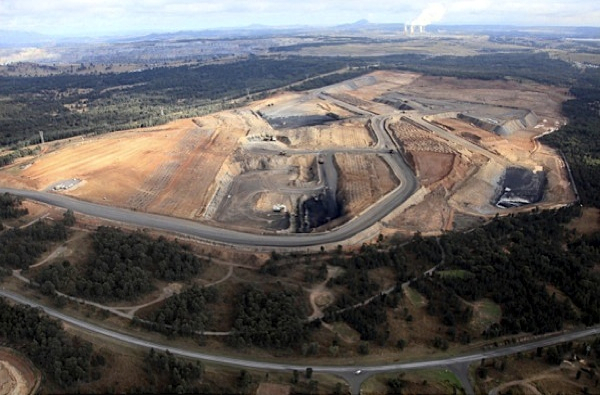
In March Glencore announced it would close its Ravensworth underground coal mine in the Hunter Valley (Image courtesy of Glencore)
In an effort to counter weakness in global fuel markets, mining and commodities trading giant Glencore (LON:GLEN) has decided to shut down all of its Australian coal mines for three weeks over the Christmas holiday season.
The decision would allow it to avoid taking more drastic measures, including closing those or other mines for much longer.
The Swiss-based company — Australia's largest coal producer — said the decision would allow it to avoid taking more drastic measures, including closing those or other mines for much longer.
According to The Australian, the firm had looked at a variety of options to curb Glencore’s output into a seaborne market already overstocked with coal. The options pondered were halting production at one of its least profitable mines for a year, the paper reports.
“This is a considered management decision given the current oversupply situation and reduces the need to push incremental sales into an already weak pricing environment,” Glencore said in a statement Friday.
It added the shutdown would cut output from its Australian operations by around 5 million tonnes. But the miner said it remains confident that demand growth for its coal will restore the supply and demand balance over the medium term.
Forced leave
Roughly 8,000 of the company’s employees will be forced to take annual leave over the period, and any staff who do not have enough leave will be required to bring forward some of next year's holidays.
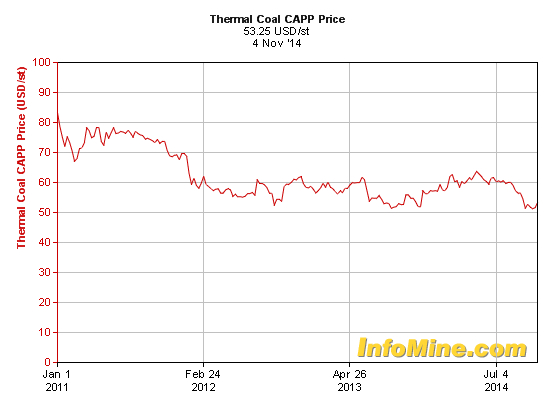
Prices for Glencore’s core Aussie production, thermal coal, have roughly halved over the past three years from about $110-130 a tonne to just over $60 a tonne.
The company owns 20 coal mines at 13 mine complexes across NSW and Queensland, which produced more than 80 million tonnes of thermal and coking coal in 2013 and employed around 8,600 people.
In March the company announced it was closing its Ravensworth underground coal mine (pictured) in the Hunter Valley, due to falling prices and stock surplus in the market..

Goldminen vs. Gold - HUI:Gold Ratio stoppt freien Fall

Unter sehr hoher Volatilität stabilisiert sich das HUI:Gold Ratio auf niedrigem Niveau und stoppt somit die Crash-Phase. Zuvor durchfuhren die Goldminen (HUI, XAU, GDX, GDXJ, GLDX) im Oktober einen der schlechtesten Monate aller Zeiten..

Quelle: stockcharts.com


Montag, 10. November 2014

Uranmarkt: Käufer kommen im großen Stil zurück - Uranaktien explodieren

Gute Nachrichten aus Japan und die Rückkehr von institutionellen Käufern sorgen für einen wahren Kaufrausch bei Uranaktien in den letzten Handelstagen.

Die tief gefallene Uranbranche überrascht letzte Woche mit einer massiven Erholungsrally, welche die Aktienkurse von sämtlichen Uranfirmen explosionsartig anstiegen ließ.

Was waren die Gründe für die plötzliche Mega-Rally? Zunächst gab es sehr erfreuliche Nachrichten aus Japan, die seit der Fukushima-Katastrophe im Frühjahr 2011 alle inländischen Uran-Reaktoren abgeschaltet hatten. Eine Stadt im Südwesten von Japan bestätigte vor kurzer Zeit den Re-Start eines Reaktors. Diese Nachricht hat natürlich große Signalwirkung und es liegt auf der Hand, dass der Markt mit potentiellen Folge-Aktionen nun zunehmend rechnet.

Japan befindet sich in der Energiepolitik in einer klaren Zwickmühle. Die Kosten für andere Energieträger wie Öl und Gas sind im Vergleich zur Kernenergie einfach sehr viel teurer. Dazu kommt der große Platzmangel in Japan und die enorme Abhängigkeit von Energie-Exporten. Als Japan noch viele, große Uran-Reaktoren im Betrieb hatte, befanden sich die Energieversorgung und deren Kostenbilanzen noch in einer wesentlich besseren Verfassung.

Parallel gab es in den letzten Handelstagen sehr interessante Marktgerüchte, die den jüngsten Aufwärtstrend in der Uranindustrie unterstützen. So war von ein paar Marktkennern in Nordamerika zu hören, dass Versorger nach langer Abwesenheit wieder auf der Käuferseite aktiv gewesen sind. Und so ist es zunehmend wahrscheinlich, dass sich das Überangebot in der Uranbranche langsam aber sicher auflöst.

Dies sorgte dann auch für einen weiteren, deutlichen Anstieg der Uranpreise, die sich seit den Mehrjahres-Tiefständen bei rund 28 USD pro Pfund im Frühsommer nun ordentlich erholten. Zuletzt markierte der Uranpreis mit einer Trading-Range zwischen 39-40 USD/Pfund ein neues Verlaufshoch. Die positive Entwicklung untermauert die laufende Bodenbildungsformation und könnte das Fundament für weitere Erholungsrallys ebnen.

Im Zuge der hoffnungsvollen News aus Fernost und dem Anstieg des Uranpreises gab es ein wahres Kursfeuerwerk bei den Uranaktien, die eine lange und extrem schwere Baisse-Phase seit Frühjahr 2011 verkraften mussten. Nachdem viele Firmen nur noch ein Bruchteil der Börsenbewertungen von vor ein paar Jahren aufweisen, sind aggressive Kursbewegungen auf diesem ausgebombten Niveau natürlich oft die logische Folge.

So kam es zu explosionsartigen Anstiege bei den Uranaktien unter extrem hohen Handelsvolumen - ein paar kleine Beispiele aus der Vorwoche:

Das breit aufgestellte Uranminen-ETF URA verteuerte sich binnen einer Woche um über 11%. Der größte Wochenanstieg seit sehr langer Zeit.

Der größte Urankonzern der Welt, die kanadische Cameco, stieg binnen eines Handelstages um mehr als 10% an. Das hat für einen Milliardenkonzern gewiss Seltenheitswert.

Produzenten wie Denison Mines und Paladin Energy erfreuten sich über noch höhere Kursgewinne unter beeindruckenden Volumen-Anstiegen.

Auch die Juniorbranche konnte massiv profitieren, etliche Developer und Explorer legten zweistellig zu. Zu den größten Gewinnern gehörte bspw. die auf die USA fokussierte Uranium Energy, welche um unglaubliche 60% auf Wochensicht anstieg. An dieser Stelle bietet sich ein Blick auf den Jahres-Chart an, der die verrückte Handelswoche abbildet:

Quelle: stockcharts.com


Das gewaltige Handelsvolumen bei den Uranaktien deutet daraufhin, dass nach langer Zeit wieder einige größere Spieler aus der Investment-Branche in den Sektor zurückgekehrt sind. Institutionelle Käuferschichten sind in jedem Fall letzte Woche aktiv geworden..